

Beyond the Scoreboard: Preparing young female athletes for the journey ahead
What does success really mean? How do young athletes know whether they are developing in the right direction? And how can they prepare for the different opportunities, challenges and decisions that lie ahead? These are questions that are often left until athletes reach higher levels of competition. Yet, the foundations for navigating a sporting journey are established much earlier. That is precisely where “Beyond the Scoreboard” comes in.
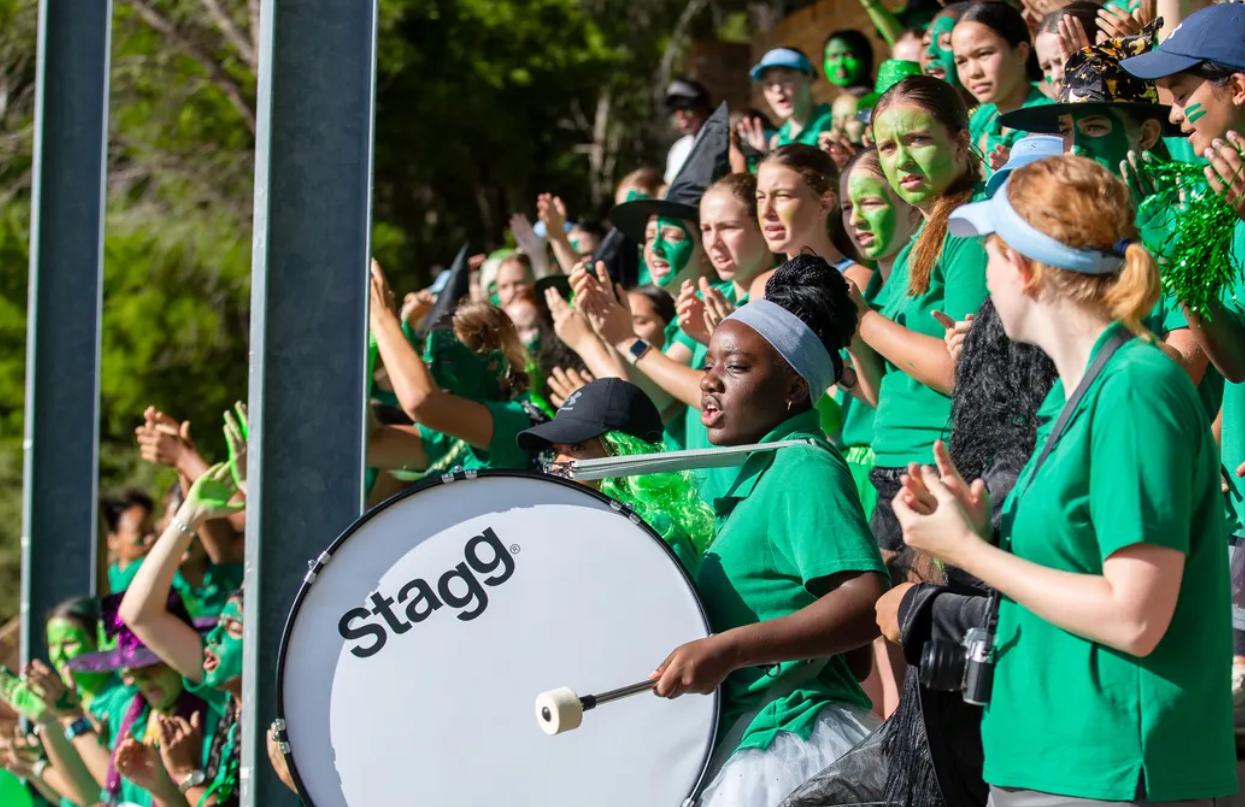
Beyond the Scoreboard is a youth sport initiative led by SportsThink360 in conceptual cooperation with ENOSS. Grade 6 learners (ages 11-12) at St Cyprian’s School for girls in Cape Town, South Africa, are introduced to some of the most important principles of athlete guidance and personal development – at a level appropriate to their age and stage.
FUNDAMENTAL QUESTIONS
Sport offers young people an incredible environment for learning, but it also brings expectations, comparisons and measures of success that can sometimes become confusing. Drawing on athlete development research and insights from initiatives such as the EU co-funded HERFORM project (including ENOSS experts), the programme explores how young athletes can develop a healthier and more informed relationship with their sporting journeys. Rather than focusing only on performance, results or selection, learners are encouraged to consider three fundamental questions:
- What does success mean to me? Young athletes are introduced to the idea that success should not simply be defined by winning, being selected or comparing themselves with others. They begin exploring their own definition of success, recognising the importance of personal growth, enjoyment, effort, learning and the values they bring to their sport.
- What should I measure – and what shouldn’t I measure? Not everything that matters in sport appears on a scoreboard. Learners explore the difference between outcomes they can influence and those they cannot, and the importance of measuring the right things. Preparation, attitude, effort, consistency and learning are all meaningful indicators of development, while results and comparisons do not always tell the full story.
- How do I prepare for the different roads ahead? Sporting journeys rarely follow a straight line. To help young athletes understand this, the programme uses an analogy of three possible roads: the high road, the middle road and the low road. The high road represents the highs, opportunities and successes that athletes hope for. The low road represents the difficult moments – injury, non-selection, disappointment or unexpected changes in direction. The middle road is where most athletes will find themselves for much of their journey: a combination of progress, ordinary days, challenges and occasional breakthroughs. An important lesson is that athletes will experience moments from all three roads, regardless of which road they ultimately find themselves on. The challenge is to recognise the road they are actually travelling, rather than the road they wish they were on, and respond accordingly. This means celebrating and making the most of the highs, developing resilience through the lows, and understanding that the middle road is not a failure to reach the high road. It is where much of the real development takes place.
STARTING AT THE RIGHT AGE AND STAGE
An important principle of Beyond the Scoreboard is that athlete guidance should not be reserved for professional athletes or those already navigating major career decisions. Grade 6 provides an opportunity to introduce these ideas before many of the more significant pressures of competitive sport emerge. The language, activities and conversations are adapted to the learners’ developmental stage, making important concepts accessible, practical and relevant to their everyday experiences.
“Our intention is not to give young athletes all the answers, but to help them develop the thinking skills, self-awareness and perspective to make better decisions as their journeys evolve.”
“Our intention is not to give young athletes all the answers, but to help them develop the thinking skills, self-awareness and perspective to make better decisions as their journeys evolve.”
Ruan Schlebusch
Beyond the Scoreboard programme lead & ENOSS associate expert
A SHARED CHALLENGE ACROSS SPORTING ENVIRONMENTS
Although Beyond the Scoreboard is being delivered in the South African education system, the questions it addresses are not unique to one country, school or sporting code. How we define success, what we choose to measure, how we respond to setbacks and how we prepare young people for uncertainty are universal challenges in athlete development.
The programme reflects a broader belief that supporting athletes means looking beyond the next match, selection or competition. It means preparing the person for the journey, not simply the performance. Ultimately, the aim is simple: to help young athletes understand that their sporting journey is theirs to shape – and that there is much more to it than what happens on the scoreboard.
Special thanks to Kate Logan for championing the programme within the school, St Cyprian’s school and staff for understanding the importance of early athlete guidance and providing space for the programme, and the grade 6s for their commitment and engagement!
© Photo courtesy of St Cyprian’s School


What the FIFPRO Global Employment Report reveals—and how evidence drives systemic action
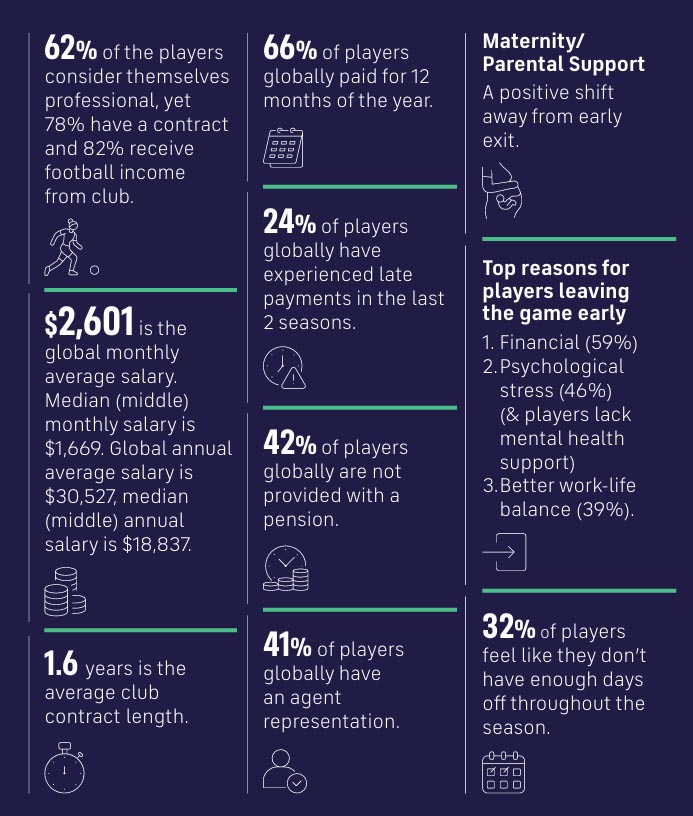
The global commercial boom in women’s sport is undeniable. High-profile international tournaments, breaking attendance records, and growing broadcast revenues signal unprecedented momentum. Yet, as the FIFPRO Global Employment Report 2026 demonstrates through empirical data from over 40 countries, economic growth does not automatically translate into institutional protection, fair working conditions, or sustainable career pathways.
For ENOSS, the report‘s findings coming out of Women’s Football are more than statistics—they are another clear call for further structural reforms across both elite and grassroots environments.
KEY FINDINGS
The report paints a stark picture of a two-tier sport ecosystem where headline growth hides widespread precarity:
- Growth without a floor: While global revenues soar, 42% of professional female players lack pension provision, and nearly a quarter experienced delayed payments in the last two seasons. Growth at the top is not trickling down into structural security.
- Mental stress and early career exit: Beyond financial instability (59%), psychological stress (46%) and the search for work-life balance (39%) are leading reasons why athletes leave the game prematurely—highlighting a critical gap in mental health support and career planning.
- The power of institutional standards: Conversely, where global standards are enforced—such as FIFPRO’s maternity regulations—player protection improves significantly. Systemic policy interventions create the essential foundation for growth.
BRIDGING ELITE DATA AND GRASSROOTS REALITY
While FIFPRO focuses on professional football, its core conclusions apply across sports and levels of performance: sustainable development requires evidence-based standards, structural support, and multi-stakeholder collaboration. At ENOSS, our organisational focus areas address these exact systemic gaps by synchronizing three core pillars:
- Applied research: Our projects aim to translate data into actionable strategies and making these usable for sports federations, policy-makers, clubs, and other stakeholders.
- Grassroots and elite alignment: Precarity at the elite level often mirrors the lack of structural support at grassroots levels. If female athletes and coaches encounter glass ceilings or unsafe environments in their local clubs, the talent pipeline breaks before it even reaches the top.
- Education and dual career: With short average career spans (1.6-year contract averages in women’s football) and high exit rates, education, dual career pathways, and lifelong learning must be integrated into sports structures from day one.
SYSTEMIC ACTION IN PRACTICE: PROJECT 35BY32
To strengthen an underdeveloped pipeline, intervention must be intentional and structural. A prime example of ENOSS’s approach to gender equality is our collaboration with 35by32, an Austrian pilot project funded by the Austrian Federal Ministry for Housing, Arts, Culture, Media and Sport.
Just as the FIFPRO report calls for institutional “floors” to protect female players, 35by32 intends to help creating a more sustainable infrastructure for female coaches and leaders:
- Visibility and mentoring: Making female coaching talent visible across sports and creating regional training networks.
- Knowledge management and multiplication: Structuring knowledge transfer within federations and grassroots clubs so that gender diversity becomes an organizational standard rather than an afterthought.
- Connecting grassroots to elite: Empowering female coaches at the community level creates immediate role models for young girls, directly countering early dropout rates and driving quality across the entire sporting landscape.
CONCLUSION
The FIFPRO Report proves that commercial success alone will not guarantee a fair, safe, or sustainable future for women in sport. Real progress requires institutional frameworks that protect athletes, support coaches, and strengthen grassroots foundations. By uniting multidisciplinary research, educational innovation, and policy design, ENOSS works to ensure that growth in sport is matched by equality in its structures. Sustainable sport requires strong foundations—from the local field to national and international stages.
Equal coaching and female leadership in sport: ENOSS x 35by32
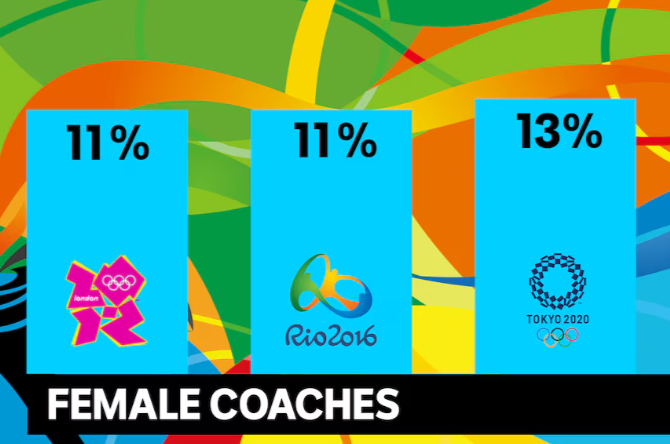
Women are still underrepresented in coaching and the management of sports organisations. As a result, there is a lack of role models, accessibility, and development pathways. This must change! Enter: 35by32.
Sport requires performance, clarity, and good decision-making. That is exactly why it also needs more diverse leadership. Mixed teams bring different perspectives, ask better questions, and often make more balanced decisions. It is not about playing men against women. It is about unlocking the full potential of a system.
“Equal coaching and female leadership in sport are not niche issues. They are a field of development for sports as a whole.”
“Equal coaching and female leadership in sport are not niche issues. They are a field of development for sports as a whole.”
Sara Montagnolli
35by32 project lead & ENOSS associate expert
When leadership structures always look the same, the solutions often stay the same too. Having more women in coaching and leadership roles expands the perspective on communication, development, team culture, and talent promotion. This is not a symbolic issue; it is a quality factor. Anyone who wants to make sports future-proof must bring more perspectives to the table. Consequently, real change happens when women are not just celebrated, but purposefully prepared, supported, and placed into positions of responsibility.
EMPOWERING WOMEN'S SPORT: A CORE MISSION FOR ENOSS
ENOSS is proud to collaborate with 35by32 – Female Coaches Pipeline Austria. Funded by the Austrian Federal Ministry for Housing, Arts, Culture, Media, and Sport, this is a nationwide pilot project that makes talented female coaches visible, provides regional support, and connects them. The ultimate goal is to sustainably bring more women into coaching and leadership roles in sports.
Promoting women’s sports and championing gender equality are core support topics for ENOSS. We firmly believe that creating equal opportunities, fair representation, and robust support systems for female athletes and coaches is essential to the future of sport across Europe. Because these values run so deep in our network, we are doing more than just cheering from the sidelines.
To ensure its sustainable success and growth, ENOSS associate expert Sara Montagnolli (project lead of 35by32) and executive director Wolfgang Stockinger are working on the project’s strategic long-term development.
© Photo courtesy of ÖFB
Research publication: Meeting career development needs of female athletes
While we know that female athletes navigate distinct career hurdles, most existing support structures are still rooted in evidence from male athletic pathways. To address this imbalance, the EU-funded HerForm project—including ENOSS associate experts—has conducted international research. Their study marks a turning point, offering a first-of-its-kind look at the specific development needs of women in sport.
ABSTRACT
Across their careers, female athletes face specific challenges, such as adjusting their training to their menstrual cycle or balancing their private and athletic life. Compared with their male counterparts, there is limited knowledge on how to best support the career development of female athletes.
In adopting an integrated knowledge translation approach, this study aimed to assess female athletes’ perceptions of career development needs and knowledge gaps relevant to navigating elite sports. Within the Erasmus+ project HerForm, a total of 132 elite female athletes ( M age = 25.9 ± 6.0 years) in their early- ( n = 47), mid- ( n = 30), and late-career stages ( n = 55) across Europe and South Africa were included.
Athletes were asked to indicate their perceived preparedness in managing 18 development areas relevant to their career (e.g., managing travel) and their respective need for information in these within an online survey. Overall, athletes indicated they were most prepared to develop and maintain social relationships. Areas in which athletes expressed they were least prepared for and wanted to be more informed about included returning to sport after child birth, negotiating contracts, obtaining sponsorships, mental health, and developing a personal brand. Athletes in their early- and midcareer stages appeared to have similar and highest information needs.
Findings are discussed based on areas most salient to advance female careers in sports, drawing from psychological, sociological, and economic evidence.
Key points
- A multinational coproductive approach was utilized to identify career development and information needs of elite female athletes (N=132).
- Athletes appeared most prepared to develop social relationships and least prepared to manage postpartum return to sport, contract negotiations, and mental health.
- Findings highlight the need to implement individually tailored support programmes specifically for early- and mid career stage females.
The full open-access article, “Meeting Career Development Needs of Female Elite Athletes—A Coproductive Approach to Career Support,” co-authored by the ENOSS associate experts Ruan Schlebusch and Wolfgang Stockinger, is now available on ResearchGate.